Pular para o conteúdo principal

Documentation Index

Fetch the complete documentation index at: https://documentation.onesignal.com/llms.txt

Use this file to discover all available pages before exploring further.

Ativar event streams

Habilite Event streams, um recurso adicional para planos pagos, para sua aplicação OneSignal. Se você não tem acesso a este recurso, não hesite em contatar seu Gerente de Sucesso ou Executivo de Conta para mais informações.

Criar uma implantação de apps script

Navegue até Extensions > Apps Script no Google Sheet ao qual você deseja adicionar eventos de mensagens do OneSignal. Em seguida, dentro do editor de código, substitua o código existente pelo seguinte:
function doPost(e) {
    // Log the full request for debugging purposes
  Logger.log("Request received: " + JSON.stringify(e));

  const sheet = SpreadsheetApp.getActiveSpreadsheet().getActiveSheet();
  let jsonData;

  try {
    // Log the postData.contents before parsing
    Logger.log("Post Data Contents: " + e.postData.contents);

    // Attempt to parse the JSON data
    jsonData = JSON.parse(e.postData.contents);
  } catch (error) {
    // Log the error and return an error response
    Logger.log("Failed to parse JSON: " + error);
    return ContentService.createTextOutput(
      JSON.stringify({ status: "error", message: "Invalid JSON" }),
    ).setMimeType(ContentService.MimeType.JSON);
  }

  // Check if the sheet is empty and set headers if necessary
  if (sheet.getLastRow() === 0) {
    sheet.appendRow([
      "User ID",
      "Event ID",
      "Event",
      "Message ID",
      "Message Name",
      "Message Title",
      "Message Contents",
      "Template ID",
      "Subscription ID",
      "Subscription Device Type",
      "Source",
      "Original Timestamp",
    ]);
  }

  // Prepare the row data from the JSON object
  const row = [
    jsonData.user_id || "",
    jsonData.event_id || "",
    jsonData.event || "",
    jsonData.properties ? jsonData.properties.message_id || "" : "",
    jsonData.properties ? jsonData.properties.message_name || "" : "",
    jsonData.properties ? jsonData.properties.message_title || "" : "",
    jsonData.properties ? jsonData.properties.message_contents || "" : "",
    jsonData.properties ? jsonData.properties.template_id || "" : "",
    jsonData.properties ? jsonData.properties.subscription_id || "" : "",
    jsonData.properties
      ? jsonData.properties.subscription_device_type || ""
      : "",
    jsonData.properties ? jsonData.properties.source || "" : "",
    jsonData.originalTimestamp || "",
  ];

  try {
    // Append the new row to the sheet
    sheet.appendRow(row);
  } catch (error) {
    // Log the error if appending the row fails
    Logger.log("Failed to append row: " + error);
    return ContentService.createTextOutput(
      JSON.stringify({ status: "error", message: "Failed to append row" }),
    ).setMimeType(ContentService.MimeType.JSON);
  }

  // Return a success response
  return ContentService.createTextOutput(
    JSON.stringify({ status: "success" }),
  ).setMimeType(ContentService.MimeType.JSON);
}
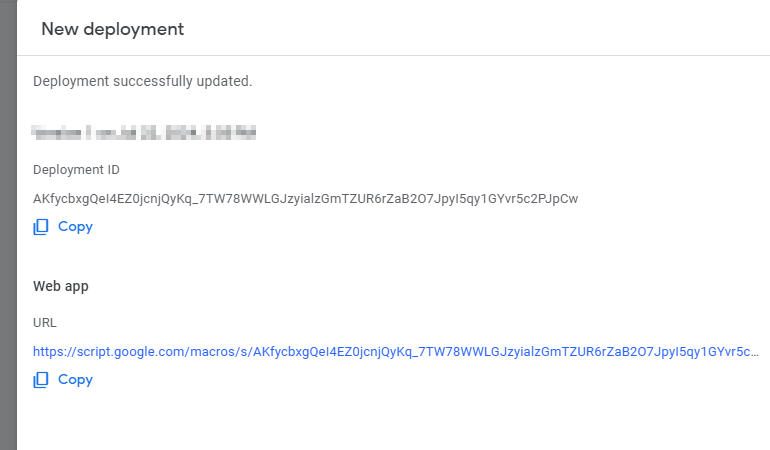
Em seguida, implante seu projeto. Clique em Deploy no canto superior direito e selecione “Web App” como tipo de implantação. Forneça uma descrição e escolha quem pode acessar o projeto; selecionaremos “Anyone” para gerar a URL necessária na próxima etapa.

Criar o event stream

1
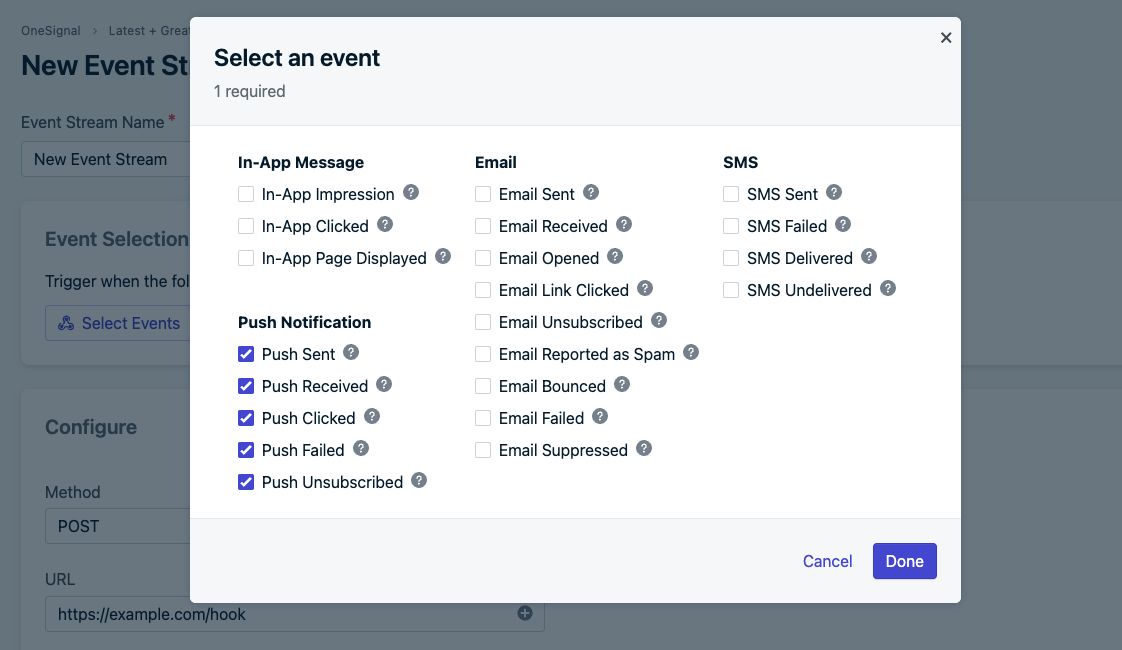
No painel do OneSignal, navegue até Settings > Event Streams (sujeito a recurso adicional). A partir daí, crie um novo event stream e selecione “Trigger when any of the following events occur”. Escolha os eventos de mensagem que você deseja sincronizar no pop-up com o Google Sheets. No exemplo abaixo, capturamos todos os eventos de notificação push.
2
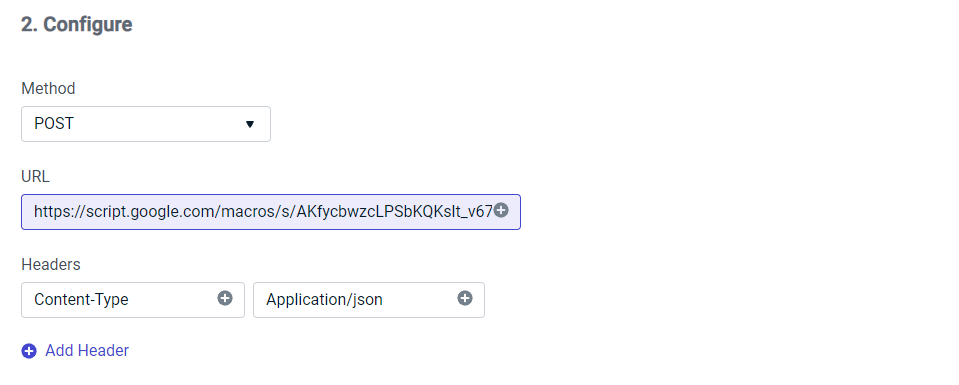
Em seguida, na etapa de configuração, escolha POST, cole a URL da etapa anterior e crie um cabeçalho para aceitar o JSON.
3
Após isso, selecione “Custom Body” no dropdown da Etapa 3 e copie/cole o seguinte código. Você pode alterar as propriedades e eventos que deseja sincronizar, conforme mostrado no exemplo abaixo. Para mais informações sobre propriedades de eventos do event stream, visite nossa documentação
{
  "user_id": "{{ event.external_user_id }}",
  "event_id": "{{ event.id }}",
  "event": "{{ event.kind }}",
  "properties": {
    "message_id": "{{ message.id }}",
    "message_name": "{{ message.name }}",
    "message_title": "{{ message.title.en }}",
    "message_contents": "{{ message.contents.en }}",
    "template_id": "{{ message.template_id }}",
    "subscription_id": "{{ event.subscription_id }}",
    "subscription_device_type": "{{ event.subscription_device_type }}",
    "source": "onesignal"
  },
  "originalTimestamp": "{{ event.datetime }}"
}
4
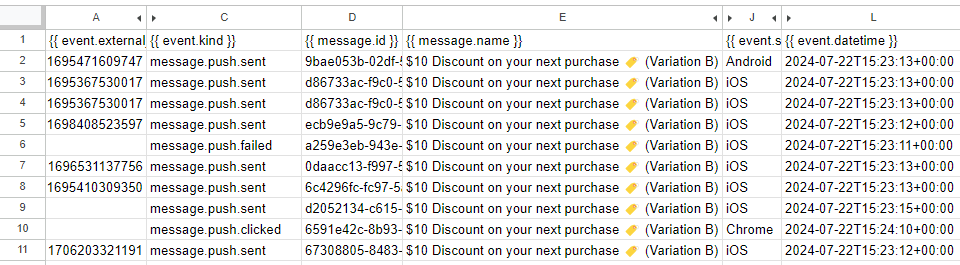
Por fim, selecione “Save & Activate” para sincronizar os eventos de mensagem escolhidos com o Google Sheet. Abaixo está um exemplo de como o código de exemplo acima é renderizado: