Daily streaks are one of the most effective retention mechanics in mobile and web apps. By reminding users to return each day, you can build habits, increase engagement, and reduce churn.This tutorial walks through three Journey configurations:
Goal: Send multiple daily push notifications throughout the day to users who haven’t opened the app today, reminding them to keep their streak alive. When the user opens the app, they exit the Journey. The next day, the cycle repeats.This approach uses user session activity only to trigger and manage the journey - no tags or custom events required. Users move through the journey using time window nodes, ensuring that your push notifications are sent at specific times of day.
In order to check if the user was active before the first time window.
If your first time window is not set to start at 8am in the user’s timezone, change the settings of the Active in last X hours segment to a suitable time (e.g. for a 10am time window, the segment should check for users that were active in the last 10 hours)
Exit when user becomes active in your app/website. & Tag users when they exit early: streak_ongoing: true
Re-entry rules
Yes, after a certain amount of time: 10 minutes
Schedule
Start immediately, never stops
Setting re-entry to 10 minutes ensures users re-enter the Journey as soon as possible. This is important to ensure that all eligible users are in the journey at the start of the new day.
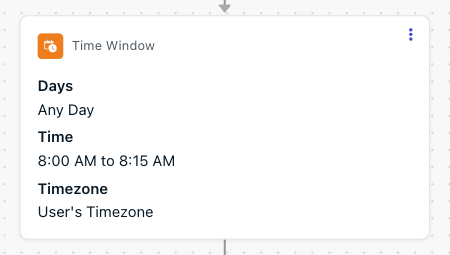
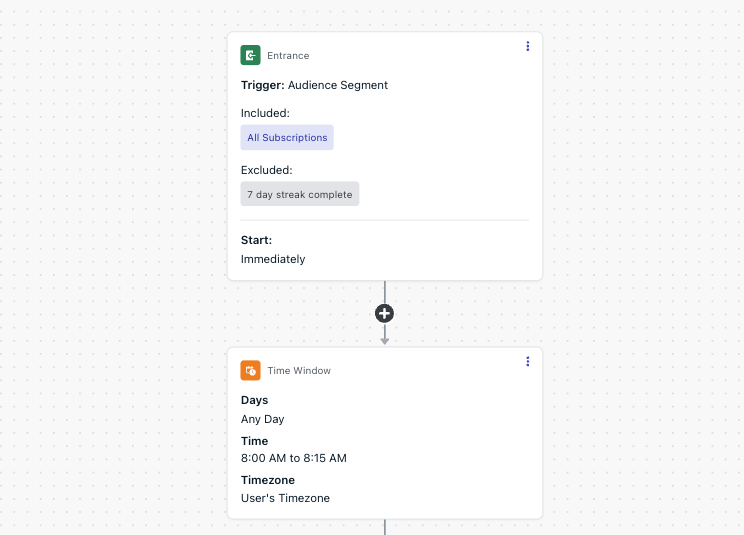
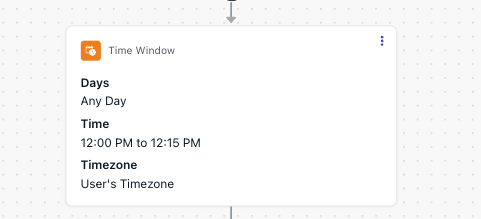
Begin by setting a Time Window node to your preferred delivery hours for the first reminder push, for example 8:00 AM – 8:15 AM every day. Enable Use user’s time zone so messages arrive at a reasonable local time.
Time Window
Users who enter the journey after this window will wait until the next day before receiving the first push notification (this will only affect new sign-ups who have had their first ever session after 8am).
2
Check for activity before first Time Window - Add a Yes/No branch
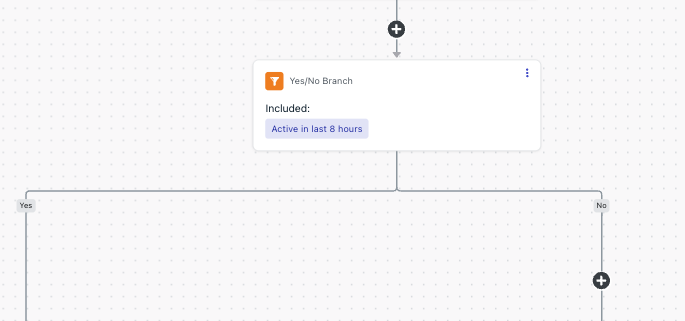
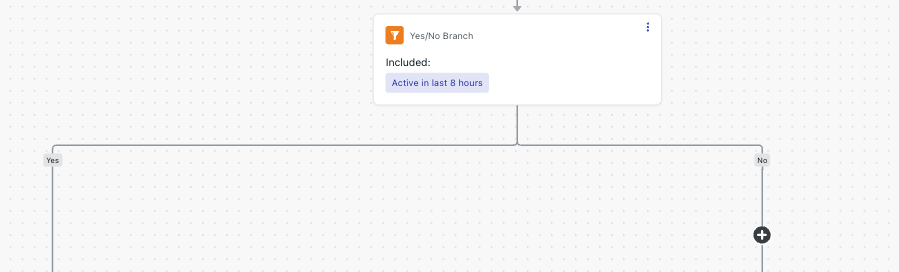
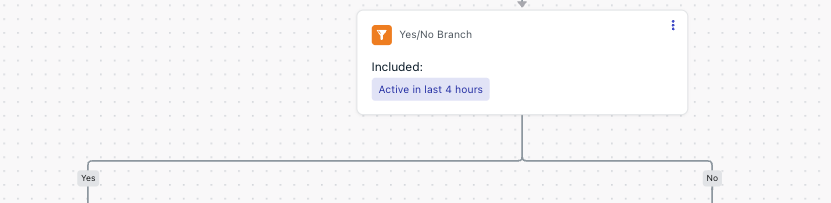
Before we send any messages, we need to check if the user was active in the last 8 hours, in case they joined the journey after 0:00am.
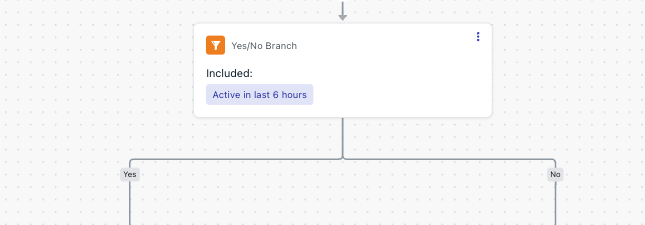
Yes/No branch
The Yes/No branch will check membership of this segment and if the user has been active in the last 8 hours, then they skip all of the messaging steps of the journey (following the yes branch).
If you have selected a different time for your first check, then you will need to adjust this segment’s name and filters accordingly to check if the user’s last session was between this time window and 00:00am
3
Add a Yes/No branch
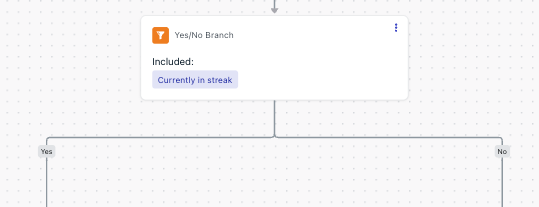
On the “No” branch of the previous Yes/No check, we want to ensure that we send appropriate messaging to our users. Here we want to branch based on whether the user has a streak ongoing or not. To do this, we need a segment of users who already have the streak_ongoing: true tag that is set when a user exits this journey early:
Yes/No branch
The Yes/No branch will check membership of this segment and send different push notifications depending on whether the user is in the streak or not.
4
First push notifications
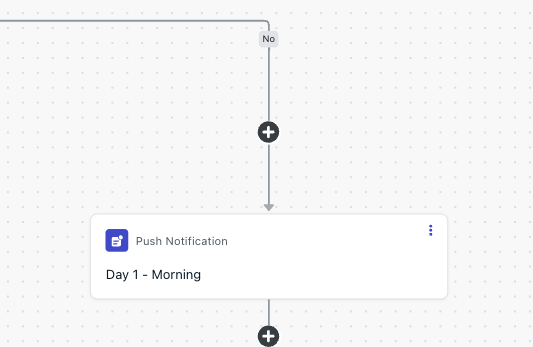
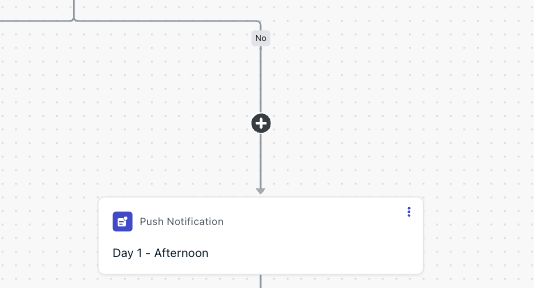
Create two different push templates which remind the user to return to the app. One should mention continuing a streak, the other should mention starting a streak. Add the continuing template to the “Yes” branch, and the starting template to the “No” branch.
Push notifications
5
Repeat the above steps.
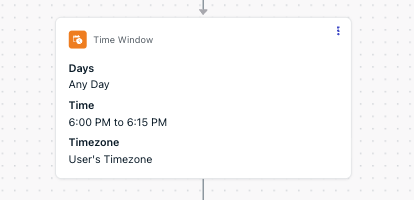
After the branches converge, repeat the above steps - Time Window → Yes/No branch → Push notifications - as many times as you think necessary, changing the time window appropriately each time.
Think about your users’ daily routines: Set the time windows for times of the day when your users might be active on their device (e.g. during their commute, at lunch time, after dinner time). Always avoid times when users are likely to be asleep.
Don’t be repetitive: Make sure that you use a different push template each time you repeat the steps - users will quickly get frustrated with seeing the same notification repeatedly throughout the day.
6
Add a final time window
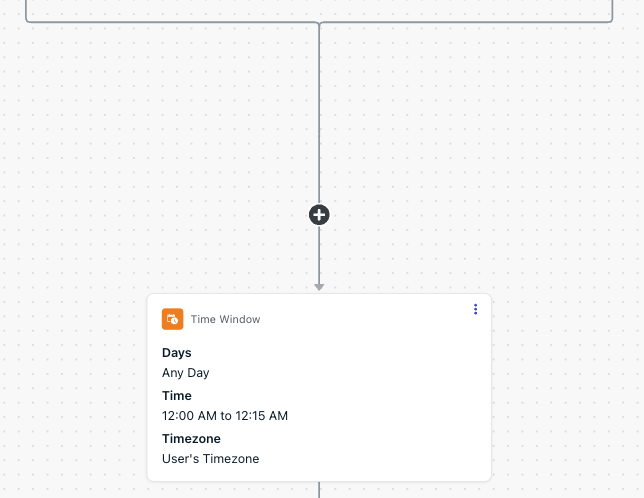
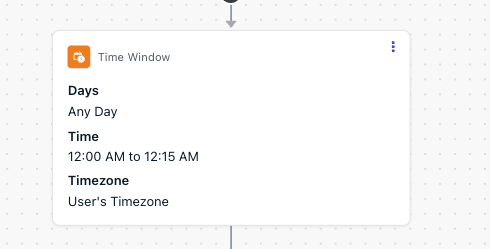
Add a time window for 12:00 AM to 12:15 AM. This signifies the start of a new day and the end of the streak.
Final time window
7
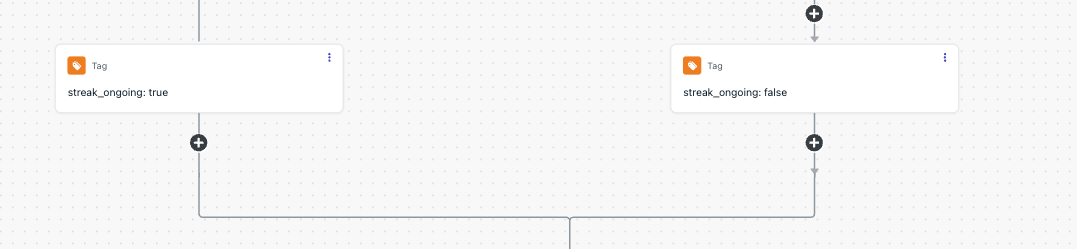
Update the "streak_ongoing" tag
If the user has made it this far through the messaging branch of the journey without exiting early, it means that they have failed their streak. We need to update the streak_ongoing tag to false with a “Tag” node, both for tracking purposes and also so that when they rejoin the journey, they are sent the appropriate push notifications.Similarly, on the “Yes” branch of our first Yes/No node (from step 2), we need to update the streak_ongoing tag to true, as the user completed their streak before our first Time Window check:
Update the 'streak_ongoing' tag
That’s it - set the Journey live. Each day users will enter the journey and be sent one of two sets of push notifications (depending on whether they are continuing or starting a streak) reminding them to log in to maintain/build their streak.
Goal: Guide users through a 7-day streak challenge. This can be a one-off, one-shot streak (ideal for time-limited events), or a repeatable streak that users can reattempt (for weekly streaks).This approach uses user activity only to trigger and manage the journey - no tags or custom events required.
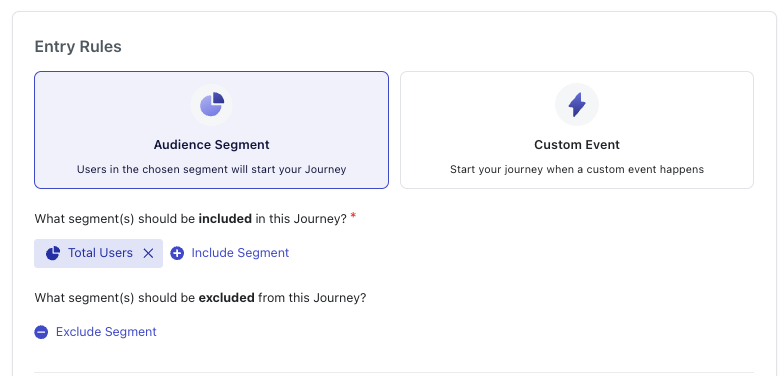
Include: Total Users segment. (Optional: Exclude 7 day streak completed to make it so that users can only complete the streak once, and 7 day streak failed to make it so that a user can only attempt the streak once)
Exit rules
Exit when user enters a segment: 7 day streak failed (Optional : Tag users when they exit early: 7_day_streak: 0 - removes users from 7 day streak failed segment and allows them to re-enter the journey after failing)
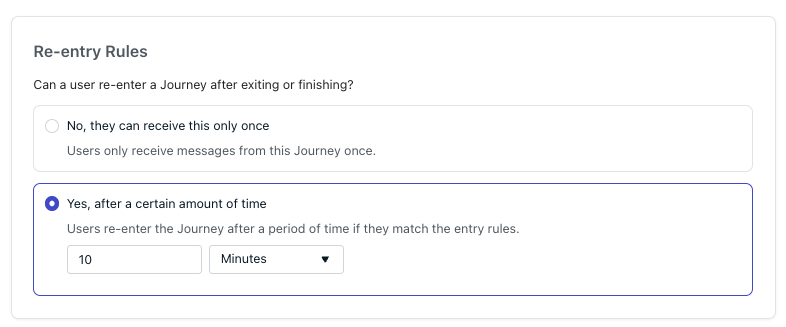
Re-entry rules
Yes, after a certain amount of time: 10 minutes (if repeating) OR No, they can receive this only once (for single attempts)
Schedule
Start immediately, never stops
The above journey settings are a guide only. If you want to change your target audience or allow users to repeat the journey, simply adjust the settings accordingly. Only the Exit rules criteria laid out above are mandatory for this journey to function correctly.
Begin by setting a Time Window node to your preferred delivery hours for the first reminder push, for example 8:00 AM – 8:15 AM every day. Enable Use user’s time zone so messages arrive at a reasonable local time.
Journey settings and Time Window
Users who enter the journey after this window will wait until the next day before receiving the first push notification (this will only affect new sign-ups who have had their first ever session after 8am).
2
Check for activity before first Time Window - Add a Yes/No branch
Before we send any messages, we need to check if the user was active in the last 8 hours, in case they joined the journey after 0:00am.
Yes/No branch
The Yes/No branch will check membership of this segment and if the user has been active in the last 8 hours, then they skip all of the messaging steps for the first day (following the yes branch).
If you have selected a different time for your first check, then you will need to adjust this segment’s name and filters accordingly to check if the user’s last session was between this time window and 00:00am
3
First push notification
Send your Day 1, first push notification.
First push notification
4
Add another Time Window node
Add another time window node so that you can send a second reminder push for Day 1 (in this example at 12pm).
A second Time Window
5
Check for activity before Time Window - Add a Yes/No branch
Before we send the next message, we need to check if the user was active since the last message, and only send the next message if they were not.
Yes/No branch
The Yes/No branch will check membership of this segment and if the user has been active in the last X hours, then they skip all of the messaging steps for the rest of the day if so (following the yes branch).
6
Second push notification
Send your Day 1, second push notification.
Push notification
7
Repeat steps 4, 5 & 6 to send more notifications.
Add more time window and message nodes to send as many push notifications in this day as you like.
Time Window
8
Add another Time Window node for 12:00am
Add another time window node set to 12:00am to move to the next day.
Time Window
9
Check for activity before Time Window - Add a Yes/No branch
Before we move to the next day’s messages, we need to check if the user was active since the last message, and only continue the journey if they were.
Yes/No branch
The Yes/No branch will check membership of this segment. If the user has not been active in the last X hours, they have failed the journey.
10
Add a tag to eject the user from the journey.
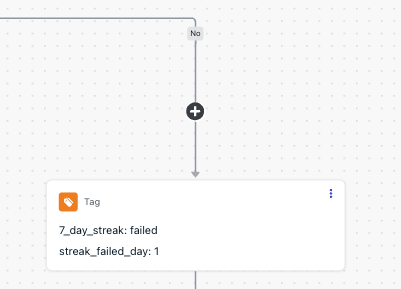
Down the “No” branch of the above Yes/No check, we need to add a tag to eject the user from the journey as they have failed to continue their streak. Add the tag 7_day_streak with the value failed here. This will put the user into the “7 day streak failed” segment and automatically end the journey for them.
Optionally, you can also add a streak_failed_day tag here with the day number as the value in order to track what days your users failed their streaks.
Streak failed tag
11
Add a wait node on the original 'Yes' branch of this day.
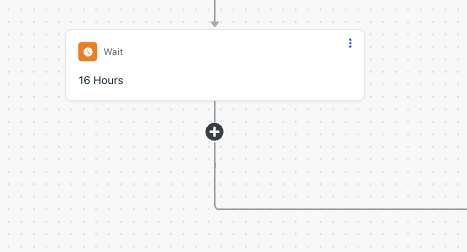
On the “Yes” branch from the Yes/No node in step 2, add a wait node for 16 hours (or whatever the time difference between your first time window time and midnight of the next day). This ensures that the users on this branch are kept in line with users who have been receiving messages on the other branch.
Wait node
12
Add a tag to signify the streak day achieved.
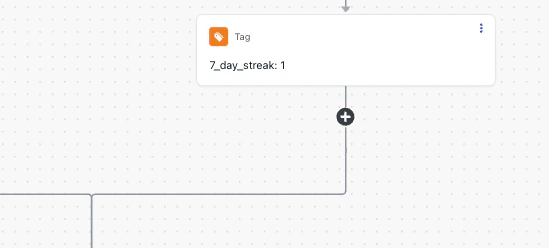
For tracking and personalization purposes, you may want to update the value of your “7_day_streak” tag to the number of the day the user is on at this stage (this step is optional).
Update '7_day_streak' tag
13
Repeat for days 2-7.
After the Yes/No branches from step 2 converge, repeat steps 2-12 for each day. Make sure that you vary your messaging each day to reflect the user’s progress through the streak.
You can use message personalisation if you want to reuse your message templates each day. Simply use liquid syntax and the 7_day_streak tag that was updated in step 12 to remind users how big their streak is so far.
14
Add a final data tag
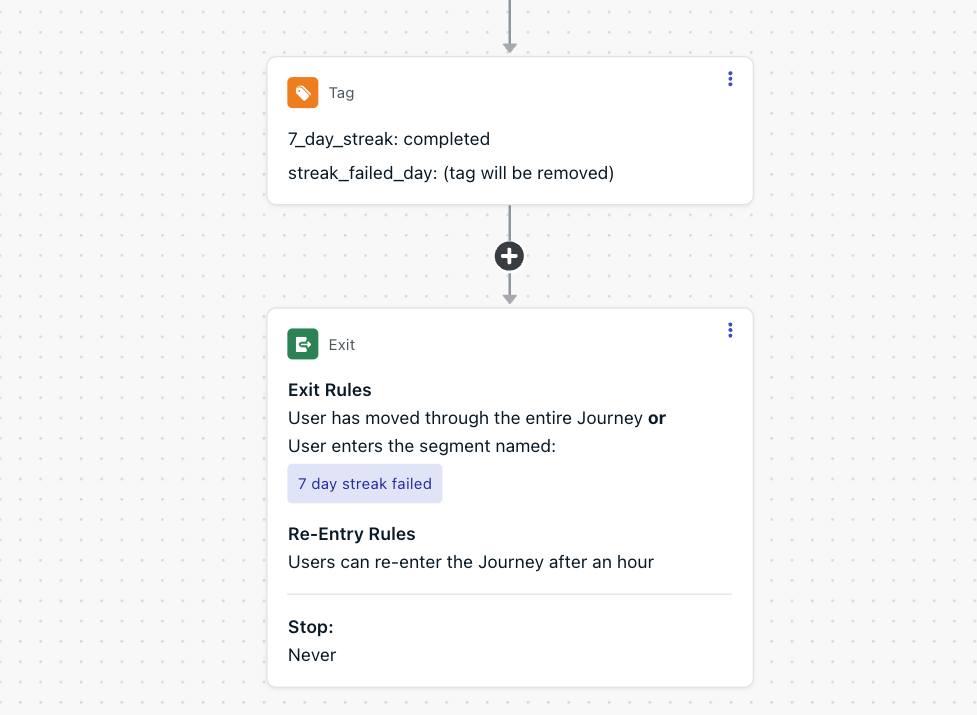
For tracking purposes, and to prevent users from re-entering if you want to only allow them to finish the streak once, just before the exit node as the final step of your journey, update the 7_day_streak to completed.If you have been setting the streak_failed_day tag as well, update this to a blank value to delete the tag.
Update '7_day_streak' tag
15
Optional: Send a 'Congratulations' push notification
At this point you may want to congratulate your users via a push notification for completing your 7 day streak before exiting the journey.
That’s it - set the Journey live. Your users will enter the journey on day 1 and will progress until they either complete their entire streak or until they have been inactive for a full calendar day. If they are inactive for a full day they will be ejected from the journey early, and depending on your journey settings, may re-enter the journey later.
1-day recurring streak with tags and custom events
Goal: Send escalating push reminders throughout the day, using a custom event (streak_continued) to detect when the user completes their daily action. As soon as the event fires, the user skips all remaining reminders for that day. If the user doesn’t act, they receive up to four reminders spaced 4 hours apart. The cycle resets the next day.This approach uses a custom event (streak_continued) to signal that a user has completed their daily streak action, and Wait Until nodes to listen for that event between reminders. Unlike the previous examples, this journey doesn’t rely on segment-based activity checks: instead, it reacts directly to an event fired by your app.
This journey focuses on sending reminders. Your app or backend should handle streak count tracking: incrementing the counter when the user completes their daily action, and resetting it when a day is missed. The journey uses a streak_counttag on the user profile to personalize messages with liquid syntax, so users who are continuing a streak see different copy than users who are starting fresh.
Send the custom event and update streak tags from your app
Each time a user completes their daily streak action (opening the app, finishing a lesson, logging a workout, etc.), send a streak_continued custom event to OneSignal and update the streak_count tag on the user profile:
Frontend SDK
REST API
// Fire the custom event to signal streak completionOneSignal.User.trackEvent("streak_continued");// Update the streak count tag (your app calculates the value)OneSignal.User.addTags({ streak_count: currentStreakCount.toString()});
When a user misses a day, your app should reset the streak_count tag to 0 (or remove it). This ensures the journey’s push templates always reflect the correct streak state.
Use liquid syntax in your push notification templates to show different copy depending on whether the user has an active streak or is starting fresh. This keeps the journey structure simple: a single push node handles both cases.Example push template:
Field
Value
Title
{% if streak_count and streak_count != "0" %}Keep your streak alive!{% else %}Start a streak today!{% endif %}
Message
{% if streak_count and streak_count != "0" %}You're on a {{streak_count}}-day streak. Don't let it end!{% else %}Open the app to start building your streak.{% endif %}
Launch URL
https://yourapp.com/streak
Create a separate template for each time slot (8am, 12pm, 4pm, 8pm) so you can vary the tone throughout the day. For example, the morning template can be encouraging while the evening template adds gentle urgency, but each template should include the liquid conditional so it adapts to both streak states.
Alternative approach: If you prefer to manage “continue” and “start” messages as separate templates rather than using liquid syntax, you can add a Yes/No branch before each push node. Branch on segment membership (e.g., a segment where streak_count is greater than 0) and route each path to a different template. This gives you more visual control in the journey builder but adds extra nodes to the canvas.
Include: Total Users (or your preferred audience segment)
Exit rules
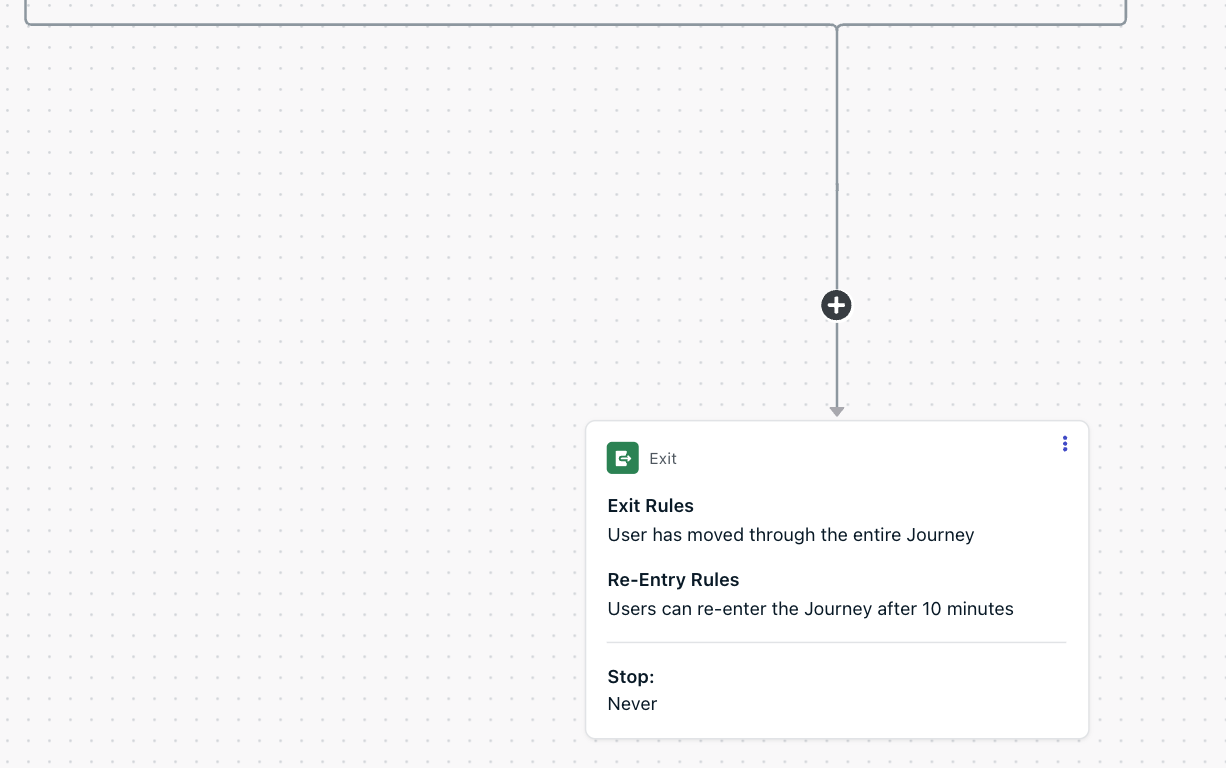
They moved through the entire journey
Re-entry rules
Yes, after a certain amount of time: 10 minutes
Schedule
Start immediately, never stops
Journey entry rules
Re-entry rules set to 10 minutes
Setting re-entry to 10 minutes ensures users re-enter the journey as soon as possible after exiting. Combined with the Time Window as the first step, users will wait at the time window until the next morning before starting a new cycle.
The journey uses Wait Until nodes to listen for the streak_continued custom event between each reminder. If the event fires at any point, the user follows the A branch and skips all remaining reminders for the day. If the event doesn’t fire before the expiration, the user receives a push notification and moves to the next Wait Until node.
1
Add a Time Window node
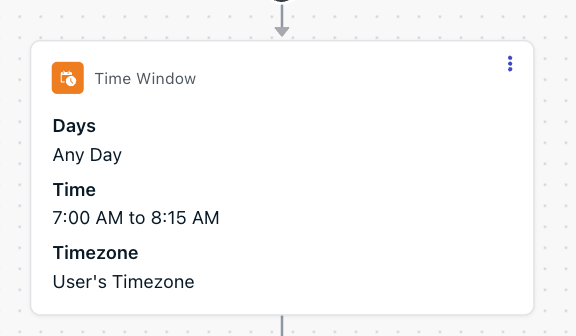
Begin by setting a Time Window node that starts slightly before your first desired reminder time, for example 7:00 AM – 7:15 AM every day. Enable Use user’s time zone so the cycle starts at a reasonable local time.
Time Window
Users who enter the journey after this window will wait until the next day before the reminder cycle begins. The window starts at 7:00 AM to give the first Wait Until node time to expire before the 8am reminder.
2
Add a Wait Until node (1-hour expiration)
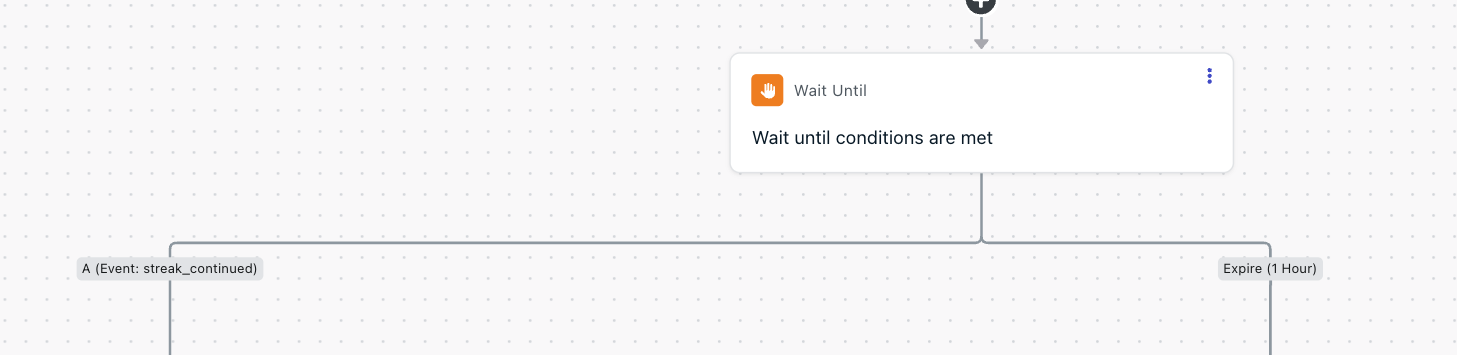
Add a Wait Until node with the condition: Custom Event streak_continued occurs. Set the expiration to 1 hour.
A branch (event fires): The user already completed their daily action early in the morning, so they skip all reminders and proceed directly to the exit.
Expire branch (1 hour, no event): The user hasn’t acted yet. Continue to the first push reminder.
The 1-hour expiration covers the gap between the Time Window (7:00 AM) and the first reminder (~8:00 AM). This gives users who are already active a chance to trigger the event before any push is sent.
Wait Until node with 1-hour expiration
3
Send the 8am Streak Reminder push
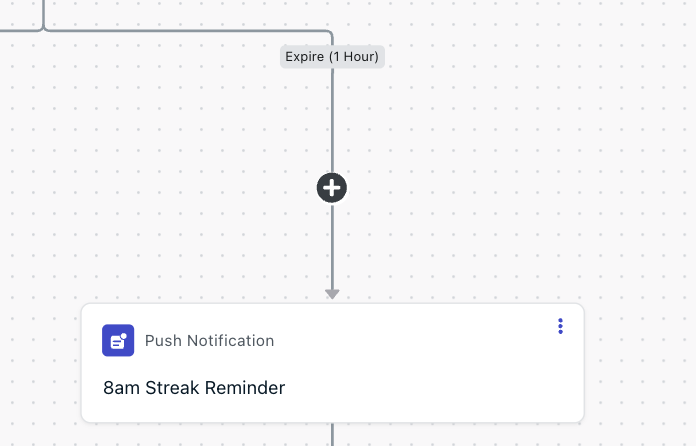
On the Expire branch, add a Push Notification node with your first personalized template (e.g., “8am Streak Reminder”). The liquid syntax in the template will automatically show “Keep your streak alive!” for users with an active streak, or “Start a streak today!” for users starting fresh.
8am Streak Reminder push notification
4
Add a second Wait Until node (4-hour expiration)
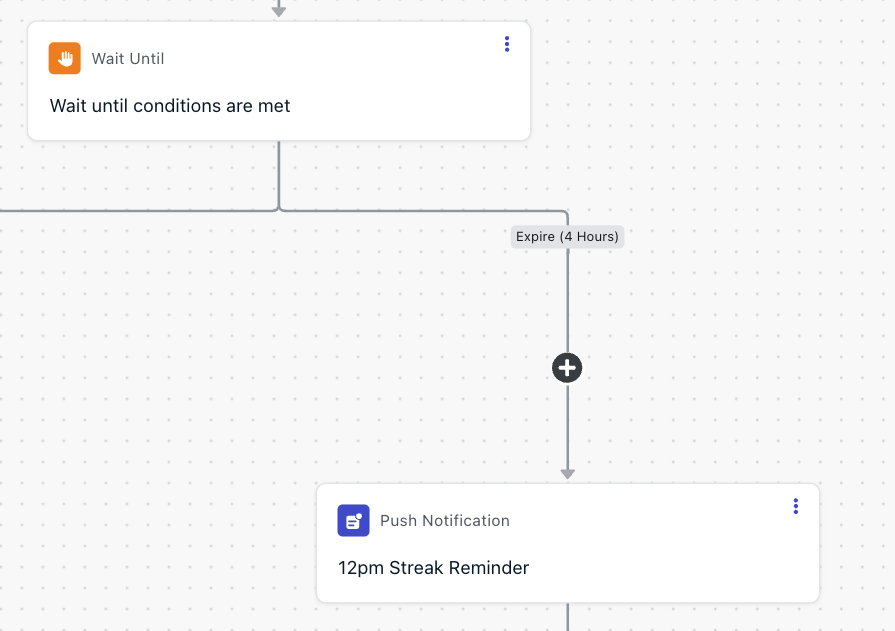
After the push notification, add another Wait Until node with the same condition: Custom Event streak_continued. This time, set the expiration to 4 hours.
A branch: User completed their action after the first reminder. Skip remaining reminders and proceed to the exit.
Expire branch: No action after 4 hours. Continue to the 12pm reminder.
5
Send the 12pm Streak Reminder push
On the Expire branch, add a Push Notification node for your midday reminder (e.g., “12pm Streak Reminder”). Use a different template from the 8am one, but include the same liquid conditional so it adapts to the user’s streak state.
12pm Streak Reminder push notification
6
Continue the pattern for afternoon and evening reminders
Repeat the Wait Until (4 hours) → Push Notification pattern for each additional reminder you want to send. In this example:
Wait Until (4 hours) → 4pm Streak Reminder push
Wait Until (4 hours) → 8pm Streak Reminder push
At each Wait Until node, the streak_continued event can fire to skip all remaining reminders and jump straight to the exit.
Don’t be repetitive: Use a different push template for each time slot. Vary the tone and messaging. Morning reminders can be encouraging, while evening reminders can add gentle urgency. Users will tune out identical repeated notifications.
7
Converge all branches to the Exit node
All A branches (from each Wait Until node where the streak_continued event fired) and the final push notification branch should converge at the end of the journey, leading to the Exit node.
Exit node
The user exits and re-enters after 10 minutes. Since the Time Window is the first step, they’ll wait there until 7:00 AM the next morning before starting a new reminder cycle.
Wait Until condition met → user follows A branch, skips 4pm and 8pm reminders
-
-
User exits journey → re-enters after 10 min → waits at Time Window for next 7:00 AM
If the user never acts, they receive all four reminders (8am, 12pm, 4pm, 8pm), then exit and re-enter the cycle the next day.
The first Wait Until uses a 1-hour expiration while all subsequent ones use 4 hours. This is because the Time Window starts at 7:00 AM, so the short first expiration ensures the 8am reminder fires on time. Adjust these values if you change your Time Window start time.
That’s it. Set the Journey live. Each day, users will be prompted up to four times to complete their daily action, with messaging that automatically adapts based on their streak status. As soon as the streak_continued event fires, all remaining reminders are skipped for the day. The cycle resets the next morning at your configured Time Window.
Don’t over-message. Ensure that you send an appropriate amount of reminders, and use Time Window nodes to control when messages are sent and avoid interrupting users during off-hours.
Use different channels where appropriate. If your users are subscribed to multiple channels, try experimenting with SMS and Email messages as part of your flow to see if streak retention increases. Note that in-app messages are not appropriate for streak reminders, as the user has to be in the app to see them, and in-app messages in journeys can only be shown to a user once, even if they re-enter the journey.
Combine with outcomes. Track streak completions as Custom Outcomes to measure the impact of your streak Journeys on retention and engagement.
Test your timing. Experiment with different delivery windows and message frequencies. Use Split Branch nodes to A/B test.
Reset streaks gracefully. When a streak breaks, consider sending an encouraging “start a new streak” message rather than a punitive one.
Can I track the actual streak count without tags or custom events?
Not directly. OneSignal’s Last Session filter tells you when a user was last active but does not count consecutive days. For streak counting, use tags or custom events as shown in the third example.
What happens if a user has multiple subscriptions?
Segment checks evaluate all of a user’s subscriptions. If a user has both a mobile and web subscription, activity on either device updates their last session time. Assign External IDs to unify subscriptions under a single user profile.
Yes. At the end of a streak Journey, use a Tag User action to mark the user (for example, streak_7day_complete: true). Your app can read this tag to unlock rewards, badges, or other incentives. You can also use a Journey webhook to notify your backend when a user completes the streak.
How do I prevent users from getting multiple streak reminders in one day?
The combination of re-entry rules and Time Window nodes handles this. Set re-entry to at least 12 hours and use a single daily time window. This ensures each user receives at most one reminder per day.
Was this page helpful?
Assistant
Responses are generated using AI and may contain mistakes.